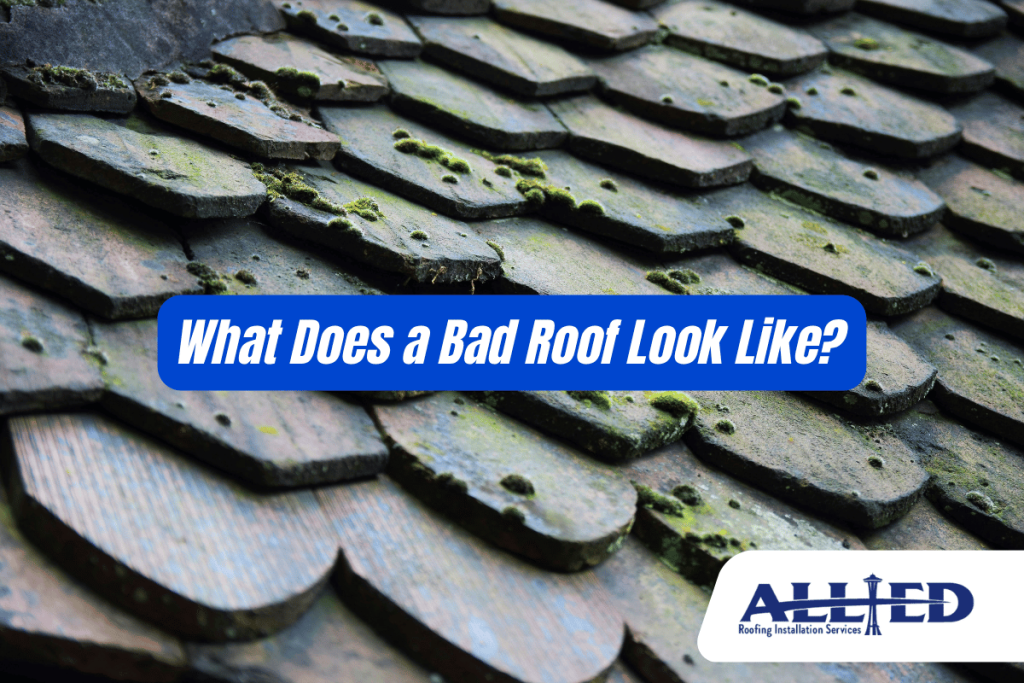
If you have ever looked up and wondered what does a bad roof look like, the answer is not always a dramatic hole or active leak. A failing roof often shows smaller clues first: lifted shingles, discolored spots, loose flashing, granule loss, or moisture inside the home. Catching those signs early can mean the difference between a focused repair and damage that reaches the decking, insulation, or interior finishes.
The Fastest Signs to Check First
Before climbing anything, walk around the property and look from the ground. A few minutes can reveal a lot.
- Missing shingles or tabs that no longer sit flat
- A wavy, dipped, or uneven roof line
- Dark patches or areas that stay wet
- Loose metal around chimneys, vents, skylights, or valleys
- Gutters holding heavy granule buildup or pulling from the fascia
- Musty attic odors, damp wood, or daylight through the decking
One problem does not automatically mean full replacement. The pattern, location, age of the materials, and amount of damage matter.
What Exterior Roof Damage Usually Tells You
A healthy asphalt shingle surface should look reasonably uniform from the street. Cracked, curled, bald, or lifted shingles mean the water-shedding layer is becoming less reliable. Wind damage can lift tabs without tearing them off, so problems after a storm are not always obvious from below.
Pay attention to valleys and roof edges. These areas manage heavy runoff and become vulnerable when shingles or edge components loosen. On a commercial roof, standing water, open seams, punctures, or membrane bubbles can also signal moisture below the visible surface.
If you are still asking what does a bad roof look like after checking outside, compare what you see with what is happening indoors. Exterior wear matters more when it lines up with moisture inside.
| What you notice | What it can point to | What to do |
|---|---|---|
| A small bare area | Localized weather damage | Schedule an inspection |
| Sagging or a visible dip | Wet decking or structural trouble | Call promptly |
| Damaged flashing | Likely water-entry point | Address before heavy rain |
| Heavy granule loss | Aging shingles | Check remaining service life |
Look in the Attic Before Water Reaches the Room
A roof leak may leave evidence in the attic before water reaches finished living space. During daylight, look for damp wood, dark staining, wet insulation, rusty fasteners, or small points of light.
Do not assume a stain sits directly under the entry point. Water can travel along rafters, nails, sheathing, and other components before it becomes visible. That is why patching the area above a mark may not fix the source.
Another part of what does a bad roof look like is what you cannot see from outside. Soft decking, repeated moisture, and hidden rot may require closer evaluation before the full extent of damage is known.
Can Green Growth Mean Roof Trouble?
Sometimes. Moss can grow on shaded, damp surfaces even when the roofing is still serviceable. The concern is prolonged moisture and improper cleaning.
Thick growth can hold moisture against shingles and work under their edges. Avoid pressure washing asphalt shingles because aggressive cleaning can strip protective granules. A professional can separate a maintenance issue from deterioration that needs attention.
When Is Repair Enough, and When Is Replacement Smarter?
A localized problem can often be repaired when the surrounding roofing is still in good condition. A small flashing failure or limited leak does not automatically justify replacing everything.
Replacement becomes more reasonable when problems are widespread, such as repeated leaks, extensive granule loss, broad curling or cracking, a sagging roof, deteriorated decking, or fixes that keep failing. Age matters, but actual condition matters more.
For homeowners dealing with storm damage, take safe photos before temporary work begins. Documentation of visible damage may also help if you later speak with your insurance provider.
Why a Professional Inspection Matters
A ground-level check cannot confirm every layer. A professional inspection can evaluate visible roofing, penetrations, valleys, drainage, ventilation clues, and likely water-entry points.
This is especially useful when you notice a new interior stain or several warning clues at once. Do not walk on a steep, wet, brittle, or visibly damaged surface. Besides the fall risk, foot traffic can worsen fragile surfaces.
Allied Roofing Can Help You Find the Real Problem
When property owners ask what does a bad roof look like, the useful answer is knowing which defect is minor, which needs repair, and which may point to a larger failure.
Allied Roofing Installation Services is locally owned and operated in Federal Way and serves residential and commercial property owners throughout the Puget Sound. Founder Eliseo Carrillo Martinez has more than 25 years of hands-on roofing experience. The company handles roof repair and replacement, along with gutters and siding, allowing the team to consider how the exterior system is managing water around the property.
Why Property Owners Choose Allied Roofing
- More than 25 years of hands-on industry experience through founder Eliseo Carrillo Martinez
- Licensed and insured in Washington, license ALLIERI810PP
- CertainTeed ShingleMaster certified
- GAF Certified
- Experience with asphalt shingles, metal, TPO, tile, and other roofing products
- Residential and commercial roofing, replacement, siding, and gutter services
Contact Allied Roofing Installation Services
If part of your roof does not look right, get it checked before the next stretch of wet weather.
Phone: 253.263.1604
Email: office@alliedrgcllc.com
Service area: Federal Way, Renton, Bellevue, Kirkland, Tacoma, Seattle, and communities across King, Pierce, and Snohomish counties.
Call today to request a free estimate.
Frequently Asked Questions
Can a Bad Roof Look Fine From the Ground?
Yes. Hidden leaks, underlayment problems, or wet decking may exist without an obvious exterior defect.
Changes inside the house are a good reason to have the system checked even when the surface appears normal.
Are Missing Shingles Always an Emergency?
Not always, but they should be addressed quickly because the exposed area has less protection from rain and wind.
A small isolated problem may be simple to fix, while multiple affected areas can suggest broader deterioration.
What Do Brown Ceiling Spots Mean?
Brown or yellow stains can indicate moisture, but the source may be roofing, plumbing, or condensation.
The source should be identified before cosmetic work is done.
Can Flashing Cause a Leak Even if Shingles Look Good?
Yes. Flashing seals vulnerable joints around chimneys, vents, skylights, and transitions, so failure there can let water enter while nearby shingles still look normal.
Should I Check My Roof After Severe Weather?
Yes, from a safe position on the ground.
Look for debris, lifted materials, visible gaps, or new indoor moisture, then contact a contractor if anything changed.